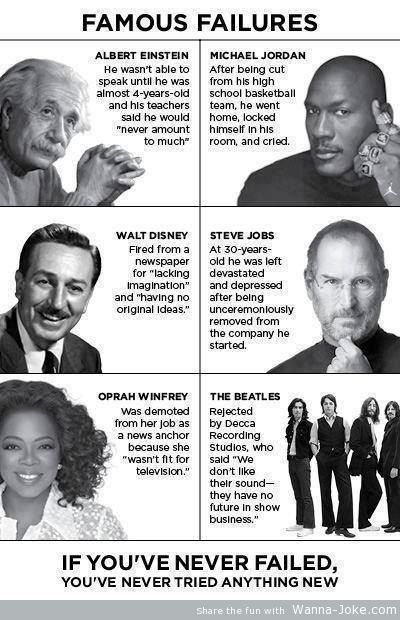
Yeah, I know. What does this have to do with teaching?
Isn’t this blog supposed to be about sarcasm and inconvenient teacher truths? Believe me, I’ve asked myself the same question. It’s been five years since my last post—five personal, long, hard, soul-wearing years. And somewhere along the way, I lost track of time. My teaching style was sharp, my labs were solid, my activities were engaging. I had it dialed in.
And yet… something still felt off.
I couldn’t compete anymore – not with phones, iPads, or the relentless tide of one-to-one technology. My best lessons couldn’t pull eyes away from TikTok or whatever app was trending that week. It was discouraging in a way that digs deep and settles in.
But what does any of this have to do with the title of this post?
In April of 2024, my dad was diagnosed with stage 4 esophageal cancer. Now, I didn’t know much about cancer staging, but I knew one thing: when there’s a “4” next to anything medical, it’s bad. Really bad.
My dad was my person. My sounding board. My rock. To this day, I’ll see something cool and instinctively think, “I can’t wait to tell Dad about this.” Then I remember I can’t, unless I want to drive out to the middle of nowhere, sit in red dirt, and talk to a mound.
Because he didn’t make it. And to be honest, there are days I wonder if I’m going to make it.
When the cancer spread to his brain and hospice took over, I watched my dad cry in the living room while the nurse filled out forms. I stayed busy with something, anything, just to avoid being in the room. And I’ll regret that forever. I’ll always wish I had walked over and held his hand.
There are moments in your life you’ll never forget. Me? Challenger explosion. 9/11. Oklahoma City bombing. And watching my dad cry, knowing the end was near, while I farted around with a dust ball on a canvas photo of me from 8th grade.
During all of this, I was teaching AP Physics for the first real time. (The first attempt doesn’t count—the students didn’t want to take the exam, so we built Rube Goldberg machines and called it good.) This time, it was serious. But my heart wasn’t in it. I didn’t want to be in the building, much less guiding students through torque and projectile motion.
One student, in particular, made it harder. He let everyone know he “might as well be the teacher,” and once commented, “If you plan to use this test next year, you might want to leave off this question.”
(I told him he was welcome to reach out to College Board himself. Surely a billion-dollar testing company would love feedback from a 16-year-old expert).
So yeah—this post might not look like it’s about teaching on the surface. But it is.
It’s about burnout. It’s about grief. It’s about how damn hard it is to keep showing up when life knocks you flat. It’s about what happens when your personal world shatters and you’re still expected to inspire a room full of teenagers.
And maybe, just maybe, it’s the most honest teacher truth I’ve ever written.
Teachers are people too.
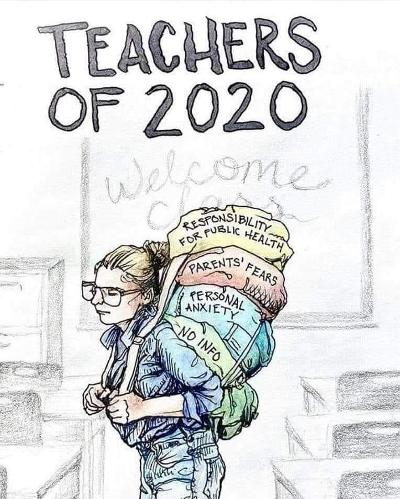
It seems obvious to say that, but the public tends to forget. And honestly, so do the people who manage us. We have lives, real, complicated, messy lives, outside the classroom. But more and more, we’re treated like machines programmed to teach, advise, plan, supervise, parent, and cheerlead… all while smiling for the camera at the latest district photo-op.
Meanwhile, administrators roll out the slogans and catchy t-shirts. The rewards? They go up the chain. The expectations? They fall on us.
No teacher should be expected to stay at school until 8 p.m. on a weekday for an open house. There, I said it. And no, we shouldn’t be expected to give up our weekends with our families to complete some “mandatory” training that isn’t required by the state, or the feds, or anyone, except the district, without compensation of any kind.
Would I give up a Saturday I could have spent with my dad in order to learn “test-taking strategies” after teaching for 20 years? I think you know the answer to that.
Teaching is one of the few professions that requires advanced degrees, only for us to be micromanaged by politicians who have never stepped foot in a classroom in any meaningful way. We’re heroic enough to be expected to throw ourselves in front of an attacker, but only on the days we’re not accused of brainwashing children with radical ideas like kindness, empathy, or respect.
And let’s be real: a lot of our students aren’t getting any of that at home.
“You knew what you were getting into when you became a teacher.” Oh, I love that one. Really?
Flight attendants knew what they were getting into too, but I’m pretty sure none of them signed up to go down with the plane.

So let’s pile all that on top of a normal day.
You teach, manage a classroom, and try to make content meaningful. And in between that? You become a phone assassin. You track bathroom breaks like you’re guarding Fort Knox. You respond to parents who swear their child definitely turned in the assignment, only for it to magically appear in their backpack three days later.
You try to close the ever-widening gaps left behind by COVID while pretending you’re not drowning in expectations. And through all of it, you’re expected to keep it together.
I never told my students what was going on with my dad. They were mostly juniors and seniors; it wasn’t their burden to bear.
Most mornings, I smacked the alarm three, four, sometimes five times. I barely brushed my hair. But I showed up. I was on time. I looked like I got into a fight trying to put a sweater on a rabid raccoon, but I made it by first period.
My nerves were fried. I cried in the bathroom during my conference periods. I was tired, hollowed out, and not entirely myself.
But I kept showing up.
And many teachers do the same. They keep showing up.
Maybe their dad isn’t battling cancer—but maybe he is. Maybe they’re up all night with a toddler who doesn’t sleep. Or they have a mother-in-law with dementia living in the guest room. Maybe they’re going through IVF, again and again. Or quietly battling depression, anxiety, chronic illness.
You don’t always see it. But they’re still there.
Because that’s what teachers do. They keep showing up.

My dad wasn’t a teacher by trade. He worked in the local petrochemical industry—probably what led to his death, if we’re being honest. They don’t call us the “Cancer Capital of the United States” for nothing. But he was smart. Talented. Could do anything.
You needed your home sheetrocked, textured, and floated? He was your guy. Brakes needed changing? No problem. Minor electrical work? Done. Make a killer gumbo? Of course. Build an entire home from scratch and never have a mortgage? Yeah, he did that too.
One time, my mom asked him if his father, my grandfather, who died when my dad was just 21, had taught him all of those skills.
“No,” he said. “I taught myself. I watched other people and figured if they could do it, so could I.”
At his funeral, I listened to people talk. One said my dad taught them to drive. Another said he taught them how to build. He taught my husband how to use every power tool under the sun. He taught me how to do fractions—at the kitchen table, while I cried. (I’ve always said, “You can tell who never learned math from Billie Ray at the kitchen table… it shows,” especially when people get worked up over small things.)
The stories just kept coming.
And then the preacher said something that stuck with me:
“Billie Ray saw value in people and invested in them the same way a teacher invests in students.”
That hit different.
Because, see, I was mad at my dad sometimes during his cancer journey. Some days, it felt like he’d given up. And I’d been raised, by him, to never give up. Never stop. Never say “enough.”
But maybe I was wrong.
Maybe he didn’t give up at all.
Maybe he still shows up—through me. Someone who is a teacher and never fully realized… that he was one too.
The day he passed, he asked my mother and me to leave the room. We sat in my old bedroom, talking. And suddenly, a light on my bedside table grew infinitely brighter, then dimmed, then settled back to normal. It was such a distinct change that it scared us.
My mom went back into the living room. That’s when she found him. He was gone.
One of my dad’s childhood friends said he thinks the angel of death came in, and that’s what changed the light.
But I believe something different.
In physics, we talk about the conservation of energy—that it can’t be created or destroyed, only transformed. And I believe, in the deepest part of my heart, that my dad was transformed in that moment. That light? That was him. Showing up to tell me goodbye.
He still showed up. Even in the end.
Just like all teachers do.
So maybe this post wasn’t just about grief. Or burnout. Or the absurdity of being a teacher in today’s world. Maybe it was about all of it. About how we keep showing up—tired, grieving, overwhelmed, and still committed. My dad showed up, even when his body was failing. And now, every time I unlock my classroom door with a cluttered mind and a cracked heart, I realize I’m doing the same thing. I’m carrying on the legacy of someone who believed that if others could do it, so could he. He was a teacher—he just didn’t need a classroom to prove it. And neither do we, on the days when we’re holding it all together with duct tape and coffee. We show up. And sometimes, that’s the bravest thing we do.

Billie Ray: March 1, 1951 – January 14, 2025




















 marvelous teacher musings